In many urban and suburban areas of the United States, two of the most annoying mosquito species are Aedes aegypti and Aedes albopictus. Both Ae. aegypti and Ae. albopictus are competent vectors of viruses such as dengue, chikungunya and Zika. This means they can feed on a person infected with the virus, become infected themselves, and ultimately transmit the virus to a new person when they take another bloodmeal about a week later.
However, most of the time Ae. aegypti is considered to be a much more efficient vector. Why? Because of where it prefers to lay eggs and who it prefers to feed on, it tends to be more common in densely populated urban areas, exactly where we see most Aedes-borne virus transmission taking place. When we do see Aedes-borne virus transmission in less densely populated areas, often Ae. albopictus is the only species present.
How to Tell Them Apart
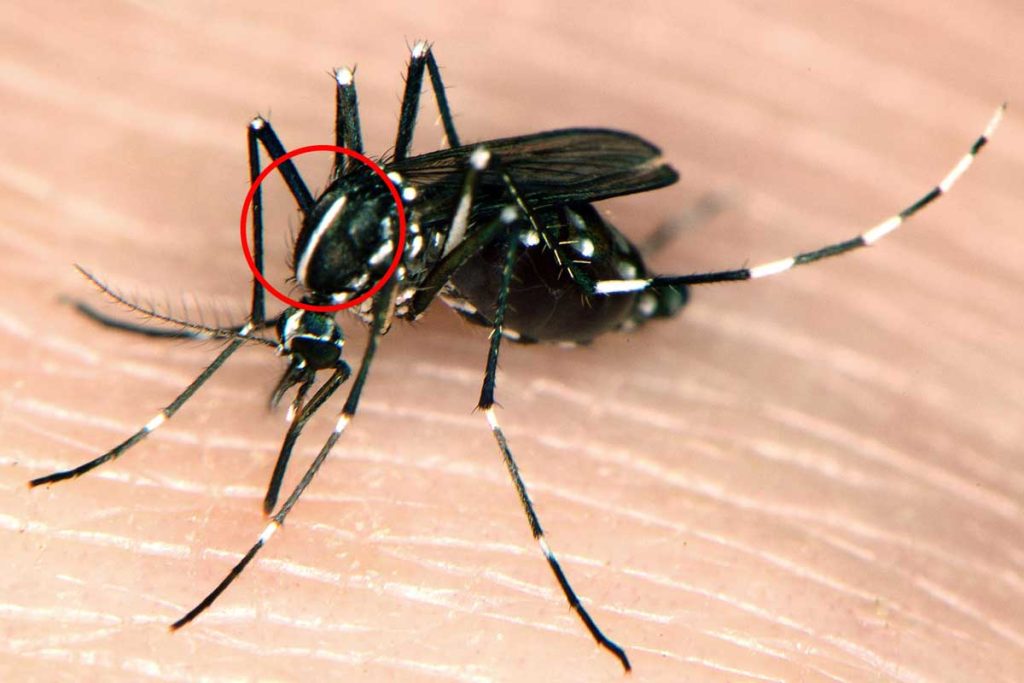
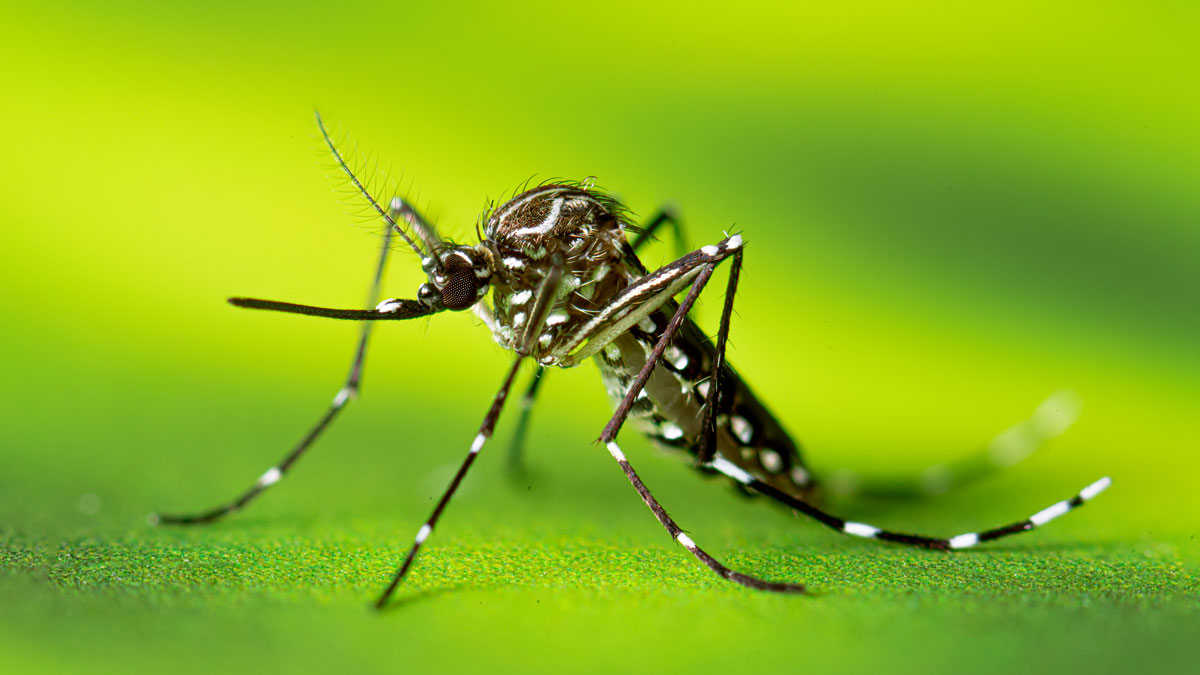
Although both species are relatively small dark mosquitoes with white banded legs, they are easily distinguished from one another by the pattern on the dorsal surface of the thorax (scutum). Aedes aegypti has a lyre-shaped white pattern, while Ae. albopictus has a single white stripe running down the middle.
There are other differences between the two species that can be utilized to tell them apart if, for example, the specimens are damaged by collection in a surveillance trap.
Aedes aegypti has a lyre-shaped white pattern. Photo by: Lauren Bishop; Brandon Clifton, CDC Public Health Image Library
Aedes albopictus has a single white stripe running down the middle. Photo by: Susan Ellis, Bugwood.org
Where They Lay Their Eggs
Both species lay their eggs in containers, natural or artificial, but here is where we start to see differences that help to explain their importance as vectors of human pathogens.
Aedes aegypti has a strong preference for laying eggs in artificial containers such as tires, pet water bowls, plant saucers, etc. Its larvae are rarely collected from natural containers. Conversely, while Ae. albopictus will lay eggs in artificial containers, it will also utilize a variety of natural containers, such as tree holes and plant axils, thus extending its local range into more suburban and rural areas.
Differences in Feeding Preferences
Another difference between the two species relates to their preference for blood feeding on humans. The females need blood to produce eggs, so they are driven to find a meal soon after emerging from the container where they developed as larvae.
Ae. aegypti has a marked preference for feeding on humans, whereas Ae. albopictus is much less selective and will usually take the first available host, be it a dog, cat, bird or even occasionally, a lizard! These feeding preferences are also shaped by host availability, so that if there is a lot of a particular type of animal in an area, that animal is more likely to be fed on.
Reducing Mosquitoes Around Your Home
Even when viruses are not present in an area, both species can be very pestiferous if allowed to thrive. It is important to empty containers, frequently clean animal watering bowls, and treat containers that cannot be emptied with larvicide.
If hidden containers such as tree holes or clogged rain gutters are still producing Ae. aegypti and/or Ae. albopictus, wearing a mosquito repellent can effectively reduce nuisance biting.
Contributing Author
Dawn Wesson, Associate Professor Tulane University