
Lower panel: Screen clip from the movie, "The Princess Bride (1987)". Upper panel: An open water habitat near San Juan, Puerto Rico taken by Donald A. Yee.
In the film The Princess Bride (1987), Inigo Montoya (played by Mandy Patinkin) speaks the above often quoted line. Herein I lay out several cases were medical entomologist use words that don’t mean what they think they mean. Given that science often conveys its findings through the written word, and as those words are used to educate elected officials and the public, it’s important to be precise and consistent in our terminology. This avoids confusion and leads to a clearer understanding and acceptance of our scientific findings.
Breeding
“Breeding” as it pertains to mosquitoes is perhaps the most often misused term in the medical entomology literature. Here, breeding is often meant to refer to where the larvae are found (e.g., a ditch referred to as a mosquito breeding site). You can easily find references to “preferred breeding sites” or “container breeding species” in the literature or in public facing documents (I’ve used this term myself in the past!). However, to breed means to sexually reproduce, and has nothing to do with the location where offspring are found. Mosquito adults breed in the terrestrial environment, often in swarms. Thus, no actual breeding (i.e., mating) taking place in water. The closest definition to this is the use of breed meaning to raise or care for, however outside of the mosquito Trichoprosopon digitatum (where the female guards her eggs) we have no evidence of parental care in mosquitoes. Breeding could relate to laying eggs as the end point of the reproductive process, however this is not what most references to breeding are about, but instead where mosquito larvae develop.
Why it’s not preferred and Suggested alternatives?
When we educate the public or lawmakers about mosquitoes it’s important that they know about their complex life cycle, as adult and larval control approach’s constitute different techniques. If the public thinks mosquitoes mate (i.e., breed) in water, then they might wrongly assume that water might be the only thing we should target for control. This leaves out the fact that adults are often found many miles from larval habitats. Thus, the correct terminology has practical applications when trying to be more effective for control and prevention.
More accurate options include “larval development sites” or “larval habitat”. The latter would be best given that it sets up the opportunity to discuss larval vs. adult habitat, as given their complex life cycle, adults and larval mosquitoes exist in different places and have different environmental requirements.
Mosquitoes Transmit Diseases
Here, the use of this phrase suggests that mosquitoes are responsible for human and animal disease, which misses the important component: the pathogen. As we know, pathogens, in the form of viruses, bacteria, Plasmodium, and worms, are the agents of the actual suffering. However, as a short hand to “an uninfected vector picks up a pathogen from an infected host and transmits that pathogen to an uninfected host”, we often condense this to “mosquitoes transmit disease”. However the disease only occurs via the actions of the pathogen. For instance, there are species of malaria that occur in birds, however as far as we know if an infected mosquito were to bite a bird infected with this pathogen and then bite a human, the human would never develop symptoms. Thus, without the symptoms there is no disease, as symptoms are entirely dependent on the pathogen-host interaction. Less than 10% of the 3,700 or so mosquito species worldwide are actually involved in the transmission of pathogens to humans, so stating, “mosquitoes transmit disease” is a massive overestimate of the actual threat across species. This makes the “mosquitoes are the deadliest animal” argument someone muted as well, as without the pathogen mosquitoes would just be an annoyance. It’s also further worth mentioning the distinction between a pathogen and a disease. For instance West Nile virus causes West Nile and West Nile encephalitis, so we’d never talk about how mosquitoes transmit West Nile, but do talk about how they transmit West Nile virus. This further clarifies the roles that the vector and pathogen play in transmission.
Why it’s not preferred and Suggested alternatives?
This correction is not just about “don’t kill the messenger,” as one of the most successful strategies for suppressing mosquito-borne disease is via mosquito control. However, controlling mosquitoes is not the only, or in some cases the best approach to controlling disease. There are highly effective vaccines for some of the worst human viruses, including those that cause yellow fever, chikungunya, and Japanese encephalitis. For animals, vaccines are available for West Nile virus and eastern and western equine encephalitis, and preventative medications exist for heartworm (Dirofilaria immitis). An effective vaccine for human malaria also now exists. Other chemical control avenues are available for prevention, including human malarial prophylaxis like Malarone, Mefloquine, and Primaquine. There are also genetic manipulations that make some important mosquito species unable to transmit pathogens, decoupling the pathogen from the mosquito entirely. Separating control efforts of the mosquito and the pathogen can lead to greater success than just targeting mosquitoes alone.
“Mosquitoes transmit pathogens that cause disease” is not as short as “mosquitoes transmit disease” but it’s more accurate. If we want a shorter phrase, it would also be accurate to say, “mosquitoes transmit pathogens,” as a pathogen is by definition any agent that causes disease.
Vector as a Verb
It’s common to see vector used as a verb (e.g., “mosquitoes vector malaria”). However, the use of vector as a verb should only occur under particular circumstances, normally involving an action to direct or guide (as in “vectoring a rocket engine”). There is no definition of vector as a verb that is equal to the word transmit. The use of this term is akin to humans taking a noun and adding -ing to the end to make it a very. An example we are all familiar with is “Googling” when we use the Google search engine to look something up. Google was a noun that was turned into a verb after repeated use (see also adulting and ghosting).
Why it’s not preferred and Suggested alternatives?
We have a perfectly good use for the noun vector, i.e., an organism that transmits a pathogen (not disease, see above) with the word transmit here meaning to move from one species to another. So it’s more accurate to write “mosquitoes that transmit a pathogen” or in specific cases “mosquitoes transmit malaria”.
Proper Names
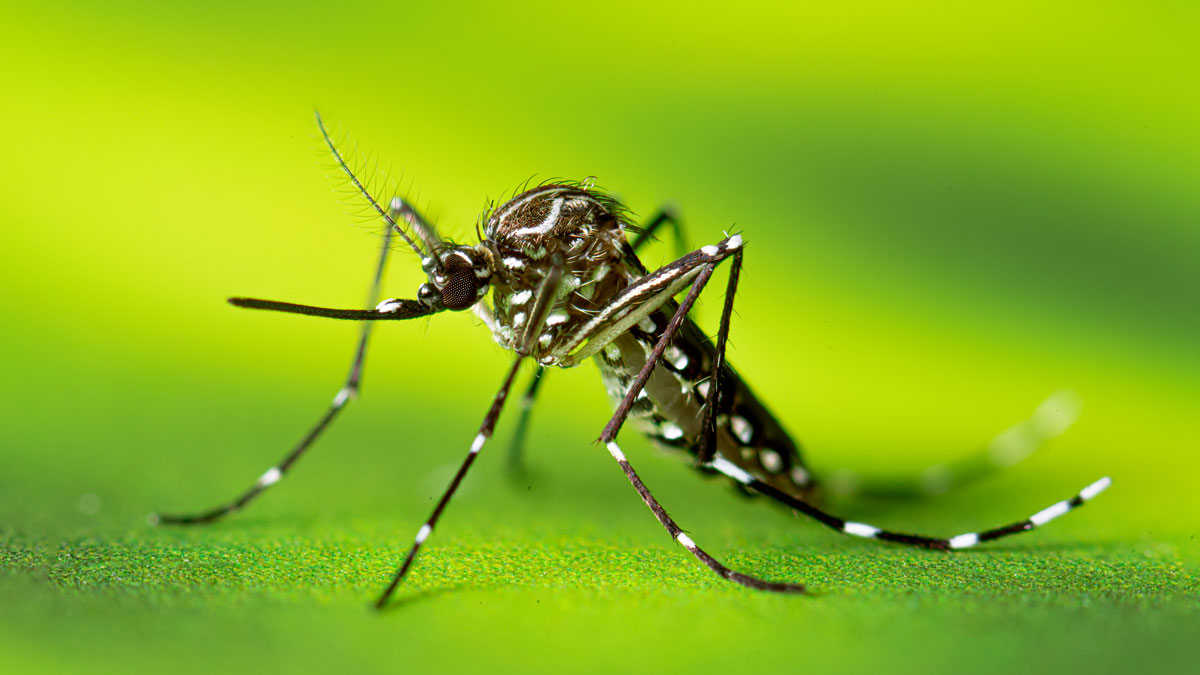
The difference between proper nouns verses common nouns comes down to whether we are attempting to be specific or general. We often know these based on the use of the articles “a” versus “the”. The former is for general cases (“a mosquito”) versus a specific species (“the mosquito Aedes aegypti). This also affects how we write those words. For proper nouns we capitalize the word but leave it lowercase when it’s not a proper noun. A common example would be to call the soil or substrate under our feet “earth”, but the specific planet we stand upon as “Earth”. In the case of pathogens and the diseases that stem from them, there are some that are proper nouns based on their origin, whereas most are common nouns as they have no specific proper source. Proper nouns usually are based on the name of a specific place (e.g., Zika virus, Ross River virus, and West Nile virus are names of specific locations), or a people group or county (e.g., Japanese encephalitis). Names that are derived from words or phrases are considered common nouns (e.g., malaria means “bad air” in Spanish, dengue is from the Swahili language meaning a sudden seizure or cramp) and are never capitilized. This also applies to common names for species. Aedes aegypti is referred to as the yellow fever mosquito, as yellow fever is itself a common noun (for the yellowing of the skin that follows the progression of the infection). However, Aedes albopictus has historically been referred to as the Asian tiger mosquito given the proper use of the origin name (note that there has been a movement to remove Asian from the common name and shorten it to just tiger mosquito). The exception to all of these are when starting a sentence, as all words are capitalized regardless of their status.
Why it’s not preferred and Suggested alternatives?
Using conventions of English writing and grammar should always be followed if one wants to achieve clarity. A quick search of the internet or a medical entomology textbook should lead to a resolution of any confusion about which pathogens or species name are proper and which are common.
Contributing Author
Donald A. Yee, Ph.D., BCE
The Yee Mosquito Lab
University of Southern Mississippi