Help your community understand dengue and take steps to reduce its spread with Gulf South VECTOR’s Dengue Social Media Toolkit. This collection of ready-to-share graphics and captions explains what dengue is, where it occurs, how mosquitoes transmit the virus, symptoms to watch for, and why prevention matters at home and while traveling.
Partners are encouraged to use these materials to promote mosquito-bite prevention, household source reduction, and awareness of dengue risk. Download the graphics, pair them with the provided captions, and share them through your organization’s social media channels.
Ready-to-Share Posts & Graphics
- When posting:
- Use the #vectoroutreach hashtag
- Mention us @vectoroutreach
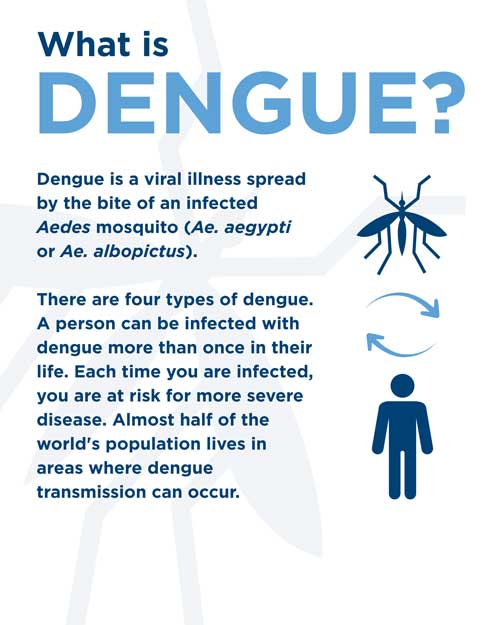
- Suggested Post Caption
Dengue is a mosquito-borne viral illness transmitted by Aedes mosquitoes. It is one of the most widespread vector-borne diseases in the world, with cases occurring in tropical and subtropical regions and increasingly in parts of the United States. For more information, visit the CDC website: www.cdc.gov/dengue/index.html
#Dengue #AedesMosquitoes #VectorOutreach
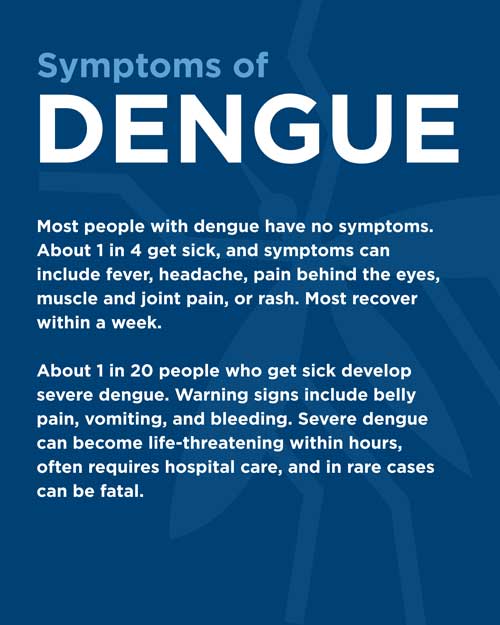
- Suggested Post Caption
Most dengue infections cause no symptoms, but severe dengue can become life-threatening within hours. Know the warning signs (belly pain, vomiting, bleeding), and remember they often show up after the fever goes away. Prevent mosquito bites by using EPA-registered repellent and dumping out standing water.
#Dengue #FightTheBite #VectorOutreach
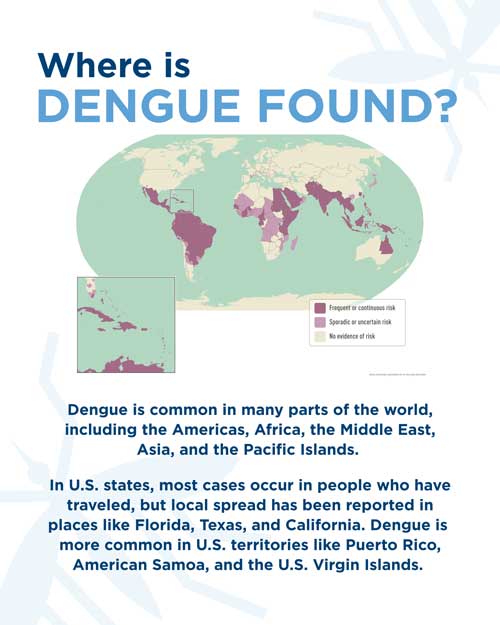
- Suggested Post Caption
Dengue is a global public health concern found across tropical and subtropical regions worldwide. While most cases reported in the continental United States are travel-related, local transmission has occurred, and dengue is an ongoing concern in southern Florida and U.S. territories.
#Dengue #FightTheBite #VectorOutreach

- Suggested Post Caption
Protecting yourself from dengue starts with preventing mosquito bites. Whether you are at home or traveling to an area where dengue occurs, personal protection and awareness are your best defenses. If you develop fever, body aches, or a rash after returning home from a trip, see a healthcare provider and share your travel history.
#Dengue #FightTheBite #VectorOutreach

- Suggested Post Caption
The two mosquito species responsible for spreading dengue, Aedes aegypti and Aedes albopictus, both develop in containers and can be found close to home. Their preference for small, water-holding containers makes them challenging to control at a community level, which is why source reduction at the household level is so important. Checking your yard weekly and eliminating standing water can help reduce their numbers and lower your risk of dengue and other mosquito-borne diseases.
#Dengue #FightTheBite #VectorOutreach

- Suggested Post Caption
Dengue mosquitoes develop close to home, making source reduction in your own yard one of the most effective steps you can take to reduce your risk. Regular yard maintenance, attention to water storage containers and water features, and eliminating standing water wherever it collects can significantly reduce the number of mosquitoes developing near your home.
#Dengue #FightTheBite #VectorOutreach

- Suggested Post Caption
Dengue spreads through a human-mosquito-human transmission cycle. When an Aedes mosquito bites a person infected with dengue, it picks up the virus and can pass it on to the next person it bites. Understanding how this cycle works is the first step in protecting yourself and your community.
#Dengue #FightTheBite #VectorOutreach
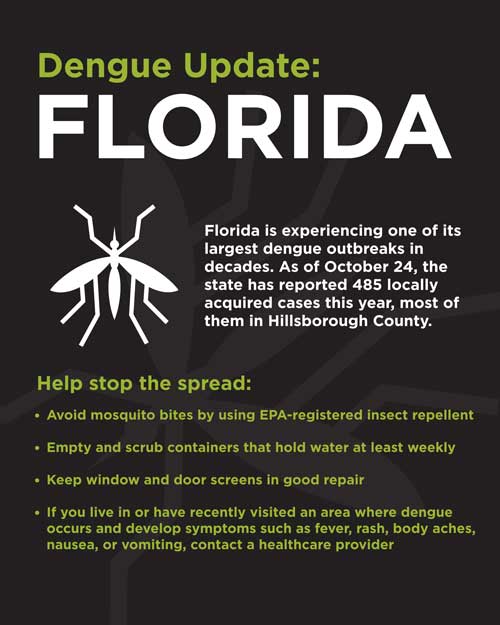
- Suggested Post Caption
Florida is seeing one of its largest outbreaks of locally acquired dengue on record, a reminder that mosquito-borne disease risk is real and close to home. Whether you live in an affected area or are planning to visit, personal protection and source reduction are essential steps in reducing your risk.
#Dengue #FightTheBite #VectorOutreach