Back-to-School Health Risk
Back-to-school generally means sickness on the rise. Not only are children in closer proximity as they come back to the classroom for the first time in months, but many people are returning to school and work after summer vacations. Now a days summer vacations, both domestic and international, pose many potential threats to health, including wildfires, heat domes, flooded streets, animal attacks, as well as foodborne and waterborne pathogen exposures, in what one New York Times article has surmised as a “Summer of Bummer.” For doctors, this means diagnosing patients must also consider potential exposures that occurred outside their patient’s day-to-day life. Vector-borne diseases pose yet another potential threat to health that patients can be exposed to during summer vacations. Long hours and warm weather encourage people to spend more time outdoors, engaging in activities such as camping, hiking, fishing, and other outdoor activities and one vector of particular concern is the Lone Star Tick.
Late Summer Brings Increased Lone Star Tick Risk
The Lone Star tick is no stranger to people living in the American Gulf South; however, this tick’s range is rapidly expanding northward into the Midwest and Northeast United States. While those living in the Gulf South may be prepared to take precautions against ticks in their own backyards, they may not be as vigilant during summer trips up North, frequently made to escape the oppressive summer heat in the South. Given recent patterns of warm winters, suburbanization, and the growing proximity of people, mice, and deer populations, popular travel destinations once thought of as safe from threat of tick-borne disease are no longer safe. For example, Martha’s Vineyard, the Massachusetts island seven miles off the coast and longtime popular travel destination known for being an upscale summer retreat, has also become host to the lone star tick in recent summers. Programs designed to increase urban green space, combined with a lack of consideration for tick treatment and prevention, have also made the threat of metropolitan tick-borne illness much more likely in cities along the Amtrak-corridor, such as Washington, Philadelphia, and New York.
The highest risk for tickborne disease comes when tick nymphs are most active. Unlike the adult ticks, nymphs are smaller and more difficult to detect on the human body. Since they may not be noticed right away, they have more of an opportunity to transmit the disease while they are still attached to the host. Regarding deer ticks, the threat of Lyme disease fades with the arrival of Fall. Deer tick nymphs are most active from mid-May through mid-July. However, peak activity for Lone Star tick larvae, the life stage prior to nymph, occurs June through August. This means heightened Lone Star nymph activity generally occurs towards the end of the summer.
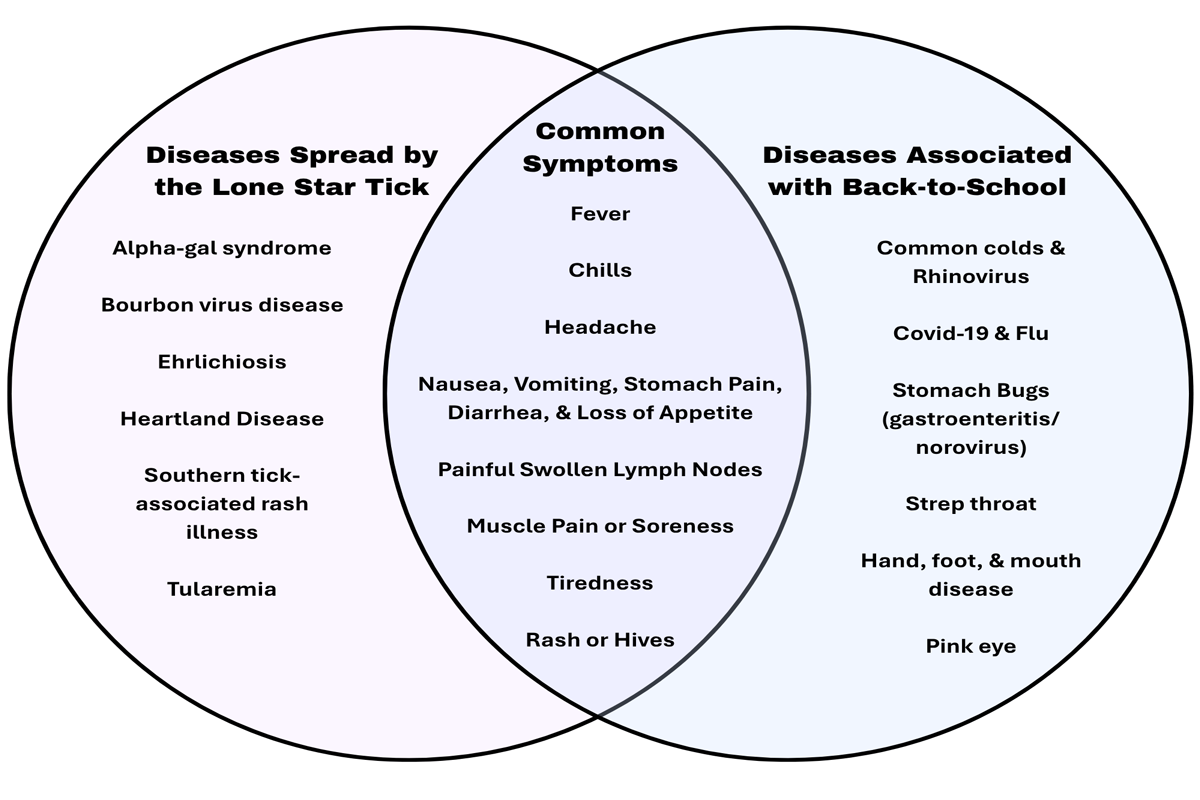
Comparison of Symptoms Between Diseases Spread by the Lone Star Tick and Diseases Commonly Associated with Children Returning to School
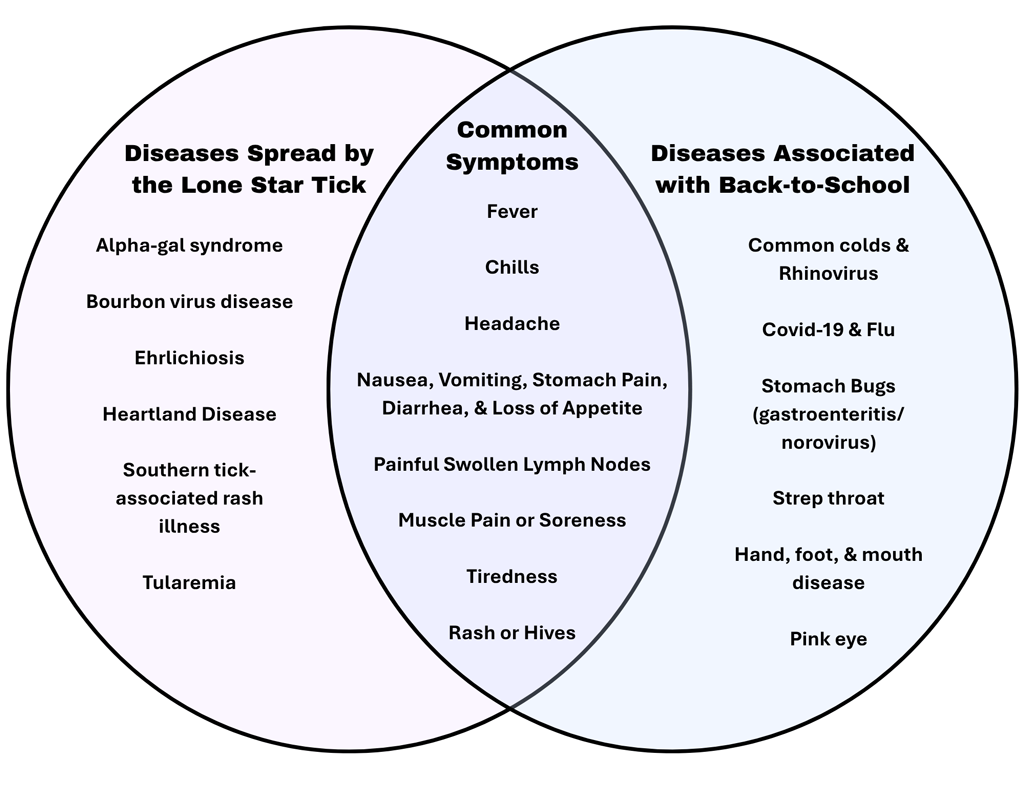
With the potential for tick bites to occur within those last few weeks of summer, symptoms related to tick-borne illness may go unnoticed as many of the symptoms are vague and can be similar to symptoms of diseases that become more prevalent as children return to the classroom (see the graph above). Therefore, it’s important that doctors ask their patients screening questions to make sure to account for any potential exposures to ticks over summer vacations this school year. Asking the following questions can help ensure that vector-borne illnesses aren’t going undiagnosed:
Exposure and History Questions
- Recent outdoor activity: “Have you spent time in wooded areas, tall grass, leaf litter or brush, or even a city park where ticks are prevalent?”
- Geographic travel: “Have you traveled to an area know for high rates of tick-borne diseases”
- Known tick bite: “Did you find a tick on your body, or do you recall being bitten recently?”
- Pet exposure: “Do you have pets that spend time outdoors and might carry ticks inside?”
Symptoms Screening Questions
- Rash development: “Have you noticed any new rashes, especially a spreading red rash or a bullseye pattern?”
- Flu-like signs: “Have you experienced sudden fevers, chills, fatigue, or body aches?”
- Neurological or joint issues: “Are you having severe headaches, stiff neck, facial weakness, or unexplained joint and muscle pain?”
Contributing Author
Sarah Baker, Climate & Health Officer
New Orleans Health Department