How Climate Change Is Reshaping Mosquito Seasons
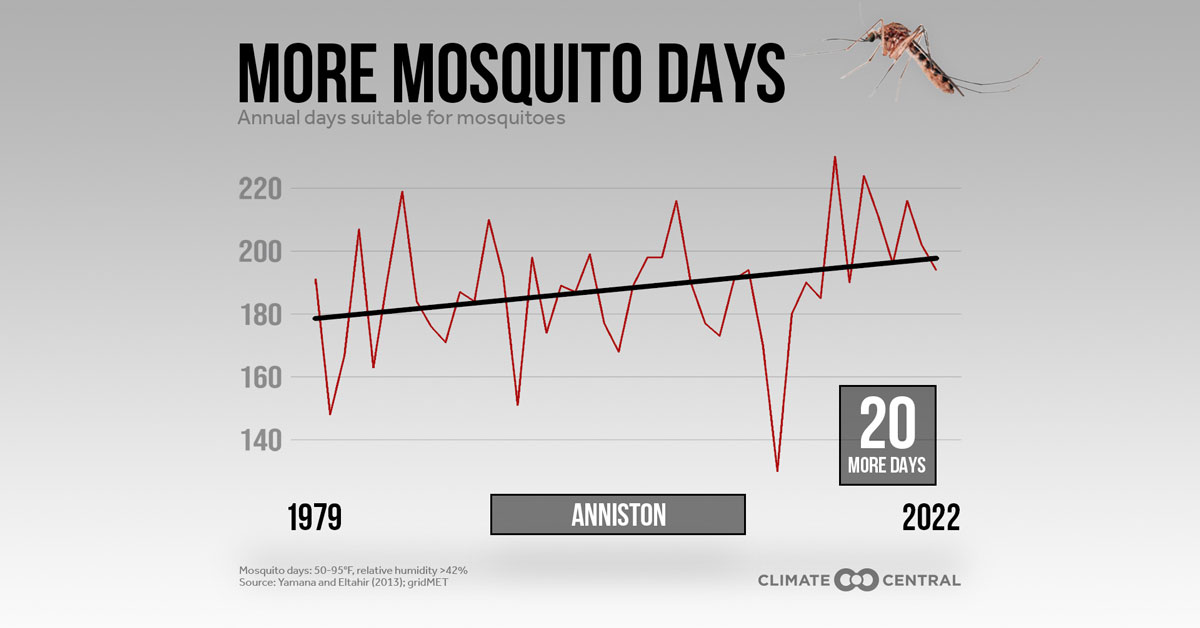
As summers grow hotter, mosquito season is getting longer for some parts of the country according to nonprofit Climate Central who analyzed four decades of weather data across 242 US cities. Cities in the Northeast, Ohio Valley, and Pacific Coast are seeing a significant increase in the number of suitable days for mosquitoes, or “mosquito days.” A mosquito day is defined as when daily minimum and maximum temperatures are both between 50F and 95F, and average relative humidity is 42% or higher. While cities in the South and Southeast have some of the longest mosquito seasons comparatively, a continuing trend of hotter, drier summers could see a decrease in the number of mosquito days in the season. According to Climate Central from 1979 to 2022, cities like Atlanta and Richmond have seen an increase in the number of mosquito days by 15 and 23 days respectively. However, cities like Houston that have been experiencing longer periods of high heat and prolonged drought, have seen a reduction of 20 mosquito days in that same time period. Cities like New Orleans and Miami that have experienced hotter temperatures, but maintain high levels of humidity, have only seen a slight increase in the number of mosquito days.

How Heat Changes Mosquito Behavior and Disease Risk
While hotter summers are changing environmental conditions, extreme levels of heat can also impact mosquito lifecycles, behavior, and patterns of disease transmission. Larvae development can be increased by intense heat and frequent rain. Urban and suburban environments maintain higher levels of heat due to urban heat island effects and offer a variety of small water containing spaces, creating a plethora of warm, shallow pools of water for mosquitoes to lay their eggs in or near. However, if it is too hot, sunny, and dry, mosquitoes will become less active during the day. Female mosquitoes may be inclined to seek out more blood meals as their metabolism accelerates in the heat, and like all animals, they can face dehydration when exposed to high temperatures. This can lead to more aggressive mosquitoes looking for a blood meal at dusk and dawn, increasing the bite rate in humans. While an increased risk of mosquito bites can increase the risk of disease transmission alone, higher temperatures can also speed up virus reproduction in infected mosquitoes, allowing them to spread diseases more quickly. A recent study found warmer environmental temperatures accelerate aging in mosquitoes, negatively affecting both longevity and infection outcomes.
Can Mosquitoes Adapt to a Warming Climate?
While summer weather patterns are changing, it’s important to remember that mosquitoes are changing with it. Studies are coming out looking at the adaptable capacity of mosquito populations as temperatures continue to rise. In desert climates mosquitoes are persisting through suitable microclimates. A recent study looking at the genetic analysis of Aedes sierrensis saw high temperatures can cause structural changes to DNA, showing adaptations to the hotter conditions. More research still needs to be done to determine how populations and overall behaviors will shift as seasonality and year-to-year variations of weather continue to change and this is where a multidisciplinary approach is essential!
Contributing Author
Sarah Baker, Climate & Health Officer
New Orleans Health Department