Investigating the Chagas Disease Vector

VECTOR
SPOTLIGHT

Gulf South VECTOR logo
Gulf South VECTOR branded Title graphic reading "Vector Spotlight"

Field evidence of Trypanosoma cruzi infection, diverse host use and invasion of human dwellings by the Chagas disease vector in Florida, USA

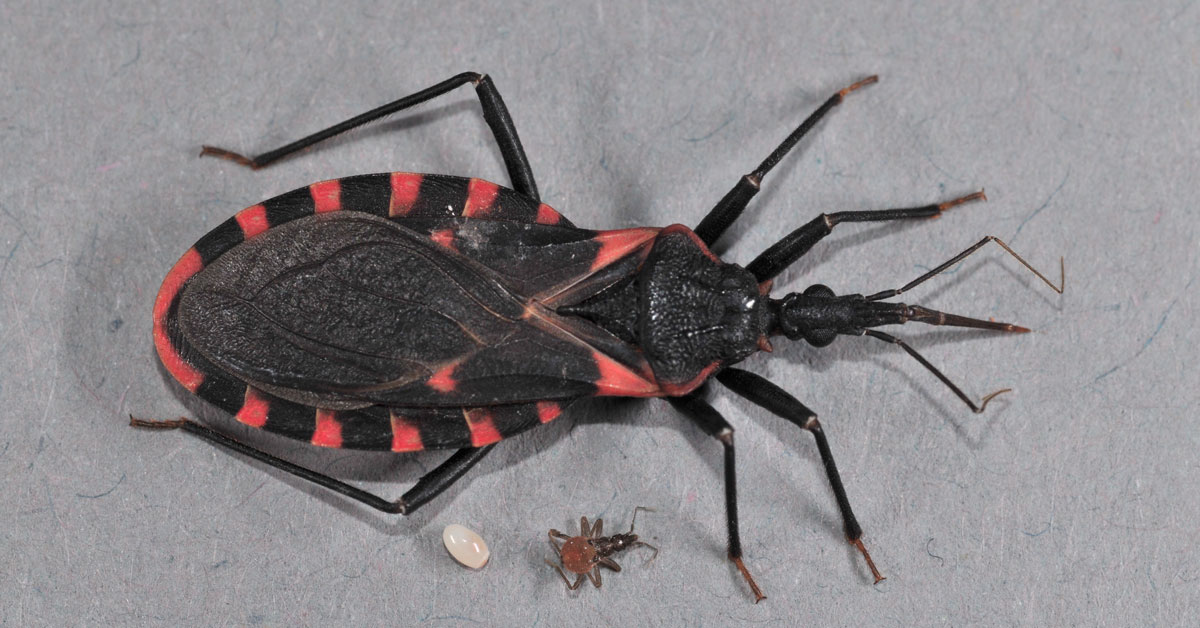
Florida is known for biting insects but one has had very little recognition until recently. A team from the University of Florida and Texas A&M University sought out to investigate the Florida kissing bug. Dr. Norman Beatty, an Associate Professor of Medicine with a special interest in medical entomology and vector-borne diseases, led the team.

“This investigation was started because community members were reaching out with kissing bugs invading their home and some found in their beds,” says Dr. Beatty. The results of the study were published in PLOS Neglected Tropical Diseases and found native Florida kissing bugs in 23 counties with 29.5% being positive for Trypanosoma cruzi. Dr. Beatty and his collaborators continue to research T. cruzi in Florida and the kissing bug to learn whether humans and companion animals are getting infected.”

Image of a scientist holding an insect collection jar with gloved hands from a barn wood pile.
Beatty collecting triatomines 2025. Photo by Sergio Mendez-Cardona, M.S.
Image of insect on wood log.
Triatomine nymph. Photo by Sergio Mendez-Cardona, M.S.
Image of an insect on a leaf.
Triatomine nymph. Photo by Sergio Mendez-Cardona, M.S.
Share this Post: