VECTOR
SPOTLIGHT


The Other Container Aedes: Aedes triseriatus
Forest habitats are rarely part of the typical mosquito surveillance stops in the south, given how many medically important species exists in open water habitats and containers in suburban and urban spaces. However, in those deciduous forests often lingers an important and often overlooked species, Aedes triseriatus, commonly known as the eastern tree hole mosquito. It’s distribution covers the entire Gulf South, from Texas to Florida and upwards to the mid-Atlantic, Midwest, and Northeast. True to its common name, it’s rarely found west of the center of the United States. Beyond the mainland United States, it does occur as far north as Greenland and south down to the island of Cuba. Although not know to be invasive, it was once collected in France in a shipment of tires from Louisiana, although all individuals were eliminated before it could establish.
The Eastern Tree Hole Mosquito: An Overlooked Forest Species
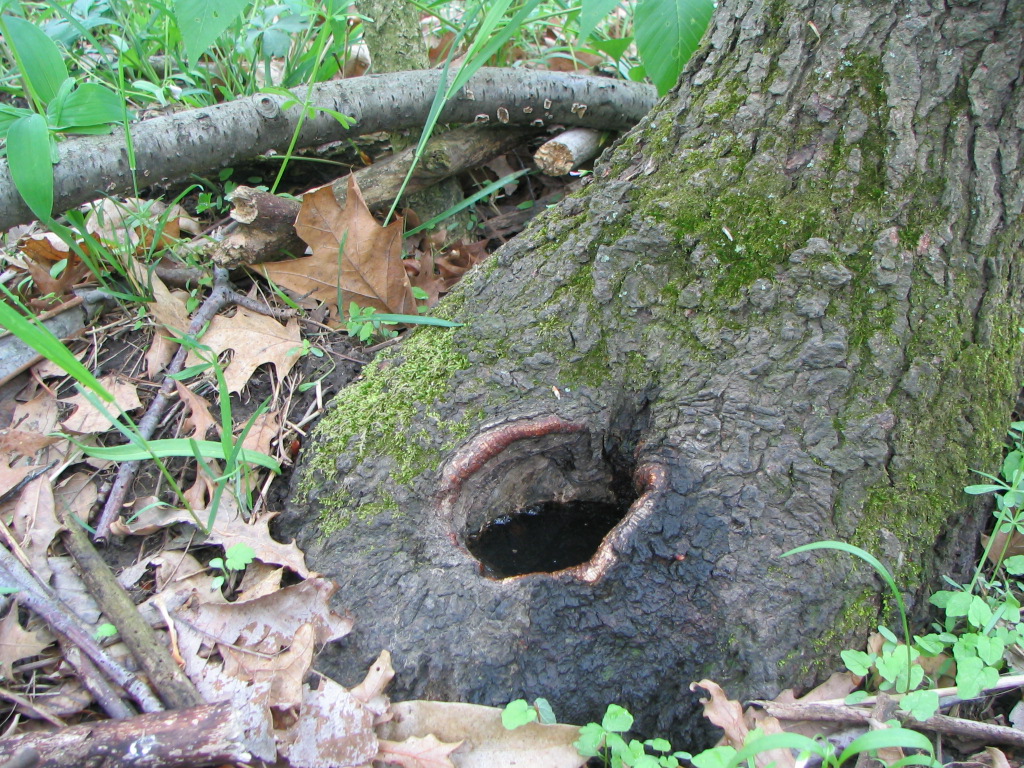
Unlike other common container Aedes (e.g., Ae. aegypti, Ae. albopictus) this species is endemic to the United States, first described by Thomas Say in 1823 from Pennsylvania. Aedes triseriatus is most often found in wooded areas, dominated by species of deciduous tree that also form tree holes, like oak, maple, and beech; as pines and other conifers rarely form tree holes this species is often less common in those forests. These holes serve as larval rearing sites, and are often filled with various forms of both dead plant material, like leaves and seeds, and dead insects. Artificial containers, especially discarded tires, can also be home to larvae, especially when there exists a canopy above those systems. Adults emerge earlier and are larger from tires versus tree hole habitats, suggesting a unique role for tires for production of this species. Deciduous forests offer a wide variety of blood meal hosts from small mammals like squirrels and chipmunks, to larger mammals like deer, and even birds, amphibians, and reptiles. Humans most likely suffer bites when the venture into forests or when human homes exist on the periphery of wooded areas. Adult females are persistent biters, but don’t often venture into sunlit areas.
Adults are rather striking, possessing dark legs and a dark body with a set of silvery and white scales that ring the thorax and are peppered around the body. There are normally three white spots on the abdominal segments from which the species derives its name (tri = three, seriatus = rows). Larvae are pale and often larger than other container species, having large sausage-like anterior gills. Late instar larvae are known to opportunistically feed on hatchlings of other species, which has led to the hypothesis that this sort of predation could explain the lack of invasion of Ae. aegypti and Ae. albopictus into forested habitats. Aedes albopictus has also been shown to be superior to Ae. triseriatus in competition under field and realistic laboratory conditions and populations declined after the arrival of Ae. albopictus in the late 1980s. In the mid-1990s Ae. japonicus arrived in the northeastern U.S., and subsequently spread as far south as coastal Mississippi with noted declines in native species, including Ae. triseriatus.
Why Aedes triseriatus Matters for Public Health
From a public health standpoint this species is important, being associated with several arboviruses both in the field and laboratory. It can transmit eastern equine encephalitis, Rift valley fever, snowshoe hair virus, Venezuelan equine encephalitis, and chikungunya virus in the laboratory. More troubling is that Ae. triseriatus is the known vector of LaCrosse encephalitis virus in the United States, which can lead to neurological symptoms in some, and can lead to death, especially those under 18 years of age. Between 30 and 90 cases are reported each year, although as most people infected are asymptomatic and thus the actual cases are likely higher. LaCrosse cases occur during the late spring through early fall, but in the Gulf states cases can occur in winter if mosquitoes are active. Historically, most cases of LaCrosse neuroinvasive disease were reported from the upper Midwestern states.
In recent years many authors have been using the newer genus name Ochlerotatus, however the adoption of this has not been universal, mainly due to the unresolved controversy regarding the monophyletic status of Aedes. It’s likely that the genus Aedes represents multiple closely-related genera, but more science is needed to fully resolve that issue.

Contributing Author
Donald A. Yee, Ph.D., Professor
School of Biological, Environmental, and Earth Sciences
The University of Southern Mississippi