News & Updates

Gulf South VECTOR branded Title graphic reading "Vector Spotlight"

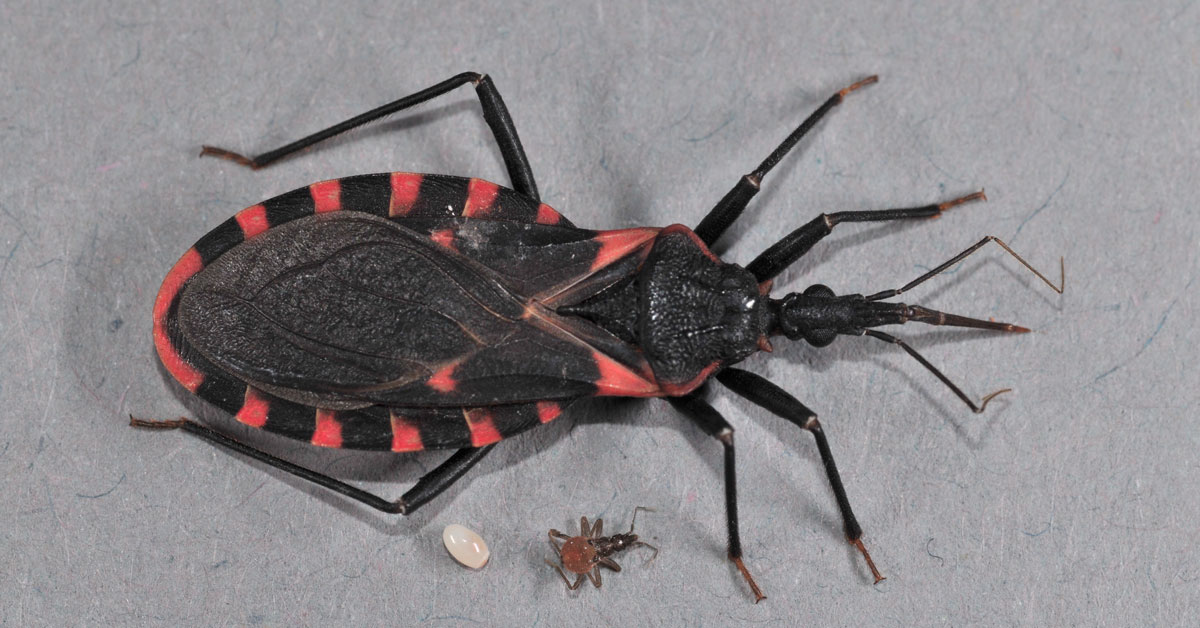
Investigating the Chagas Disease Vector

A new study led by the University of Florida and Texas A&M reveals that Florida’s little-known kissing bug is more widespread than previously recognized, with nearly 30% carrying Trypanosoma cruzi. Researchers continue investigating the risks this insect may pose to humans and companion animals.

Read More »
Close-up image of petri dish with worker using tweezers to count mosquito larva. Words "West Nile Virus" and "Dengue Fever" are superimposed on the image.

New Video Highlights Why Mosquito Control Matters

For World Mosquito Day, Gulf South VECTOR highlights the importance of mosquito control with a new educational video. Honoring Sir Ronald Ross’ discovery of malaria transmission, the initiative continues building regional capacity to prevent vector-borne diseases and protect communities across the Gulf Coast.

Read More »
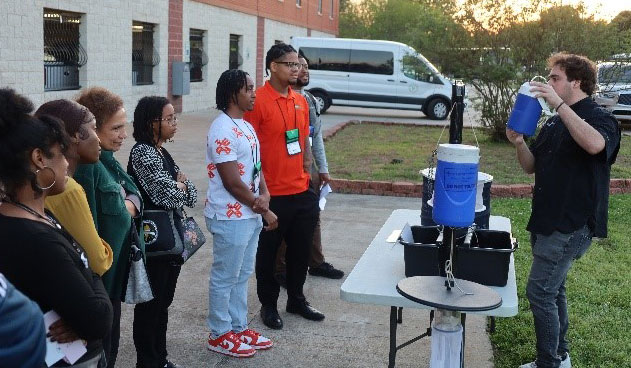
Attendees in a speaker session at the 2025 National Environmental Health Association Annual Educational Conference. professional conference

Advancing Vector Control: Highlights from the 2025 NEHA Annual Conference

At the National Environmental Health Association (NEHA) 2025 Annual Educational Conference (AEC), held July 14–17 in Phoenix, Arizona, vector and pest control prevention played an important role in educating professionals. A preconference workshop, From Blueprint to Action: Building and Managing an Effective Vector Control Program, provided hands-on training to strengthen local mosquito abatement and integrated vector management. The program also featured four vector-focused sessions, highlighted by a panel with Dr. Spiros Mourelatos and Dr. Daniel Markowski, moderated by NEHA CEO Dr. David Dyjack. Panelists explored political, technical, and financial realities shaping mosquito control, with strong audience engagement underscoring the urgency of these issues. NEHA will continue expanding these offerings to equip environmental health professionals with the tools and partnerships needed to confront emerging challenges.

Read More »
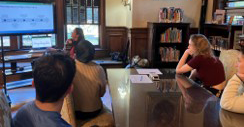
A guest speaker from Cook's Pest Control talks to students in classroom at FAMU.

Industry–University Partnership Grows as Cook’s Pest Control Engages FAMU Students

Cook’s Pest Control strengthened its longstanding partnership with Florida A&M University through two campus visits in 2025, connecting students with internships, career pathways, and professional development opportunities. These engagements highlight growing industry–university collaboration and expanded experiential learning options for FAMU’s entomology and agribusiness students.

Read More »
Two scientists are working in a lab preparing samples for testing.

Closure of the Walter Reed Biosystematics Unit

The closure of the Walter Reed Biosystematics Unit ends decades of critical mosquito taxonomy and systematics research. With staff gone and online resources removed, only the Smithsonian-held collection remains—leaving a major gap in national vector research capacity and the tools that supported global public health and military readiness.

Read More »
Person positioning a mosquito surveillance trap in a weeded area behind a building.

Why Student Internships in Vector Control Matter

Internships in vector control give students essential, hands-on public health experience—from fieldwork and surveillance to community engagement. Alexandros Pavlakis’ journey from intern to entomologist shows how these opportunities build practical skills, deepen scientific understanding, and prepare future professionals to protect communities from vector-borne diseases.

Read More »
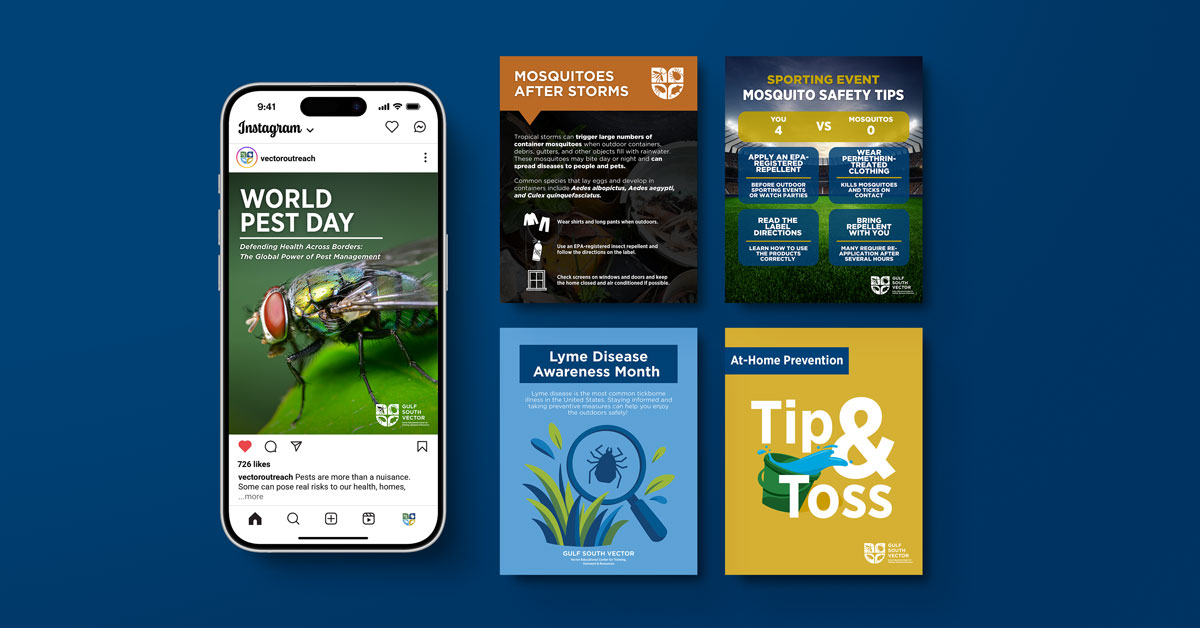
A collage of social media posts

Repellent Tips – Social Media Toolkit

Gulf South VECTOR has launched its first downloadable social media asset campaign, offering ready-to-use graphics and captions to support unified vector-borne disease prevention across the region. Designed for organizations, agencies, and businesses, this toolkit makes it easy to share expert-vetted messaging on Instagram, Facebook, and LinkedIn—helping partners strengthen awareness, encourage prevention, and promote consistent regional outreach.

Read More »
Person collecting a sample of standing water from an open container for mosquito larvae testing.

What Is a Vector? Understanding the Gulf South VECTOR Project’s Mission

To support the Gulf South Vector Project’s mission, it’s essential to understand the term vector. In public health, a vector is any organism, such as mosquitoes, ticks, or fleas, that transmits pathogens and diseases from one host to another. These small but dangerous carriers are responsible for spreading illnesses like West Nile virus, dengue, and Lyme disease.

Read More »