Gulf South VECTOR introduces this “Did You Know?” social media toolkit to share quick, science-based facts about vectors, vector management, vector-borne diseases, and prevention.
These posts highlight the biology and life cycles of vector organisms, how monitoring and data guide vector management decisions, and how integrated vector management relies on multiple strategies, not just spraying. These short, approachable messages help clear up common misconceptions and show how both communities and professionals play a role in reducing the risks of vector-borne diseases.
All graphics are ready to use and formatted for Instagram/Facebook and LinkedIn, with suggested captions included for easy sharing. By posting these “Did You Know?” messages, partners help support a consistent regional message and promote informed, effective mosquito prevention.
Did You Know? Mosquito Tip 1

- Suggested Post Text
Mosquitoes that lay eggs in containers usually select multiple locations rather than just one, and only a small amount of water is needed for larvae to successfully develop into adults. Buckets, plant saucers, children’s toys, pet dishes, and even bottle caps can all become mosquito development sites. Checking and emptying containers regularly helps break the mosquito life cycle and reduces the number of places where mosquitoes can develop.
- Download
Did You Know? Mosquito Tip 2

- Suggested Post Text
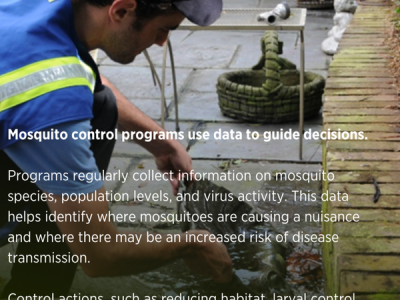
Integrated mosquito management programs depend on current data to make informed decisions about mosquito treatments. Staff regularly monitor mosquito populations by collecting and identifying mosquitoes, tracking population levels, and testing for viruses. This information helps determine when, where, and if treatments are necessary. Using real-time data enables science-based decisions that protect public health while using resources efficiently.
- Download
Did You Know? Mosquito Tip 3
- Suggested Post Text
Integrated mosquito management (IMM) employs different methods to reduce mosquito numbers, and spraying is just one of many tools. IMM combines several strategies, such as reducing standing water, controlling larvae, monitoring adult mosquito populations, testing adult mosquitoes for viruses, educating the public, and applying targeted treatments only when necessary. The goal is to use the most appropriate method at the right time to reduce mosquito populations while minimizing environmental impacts.
- Download